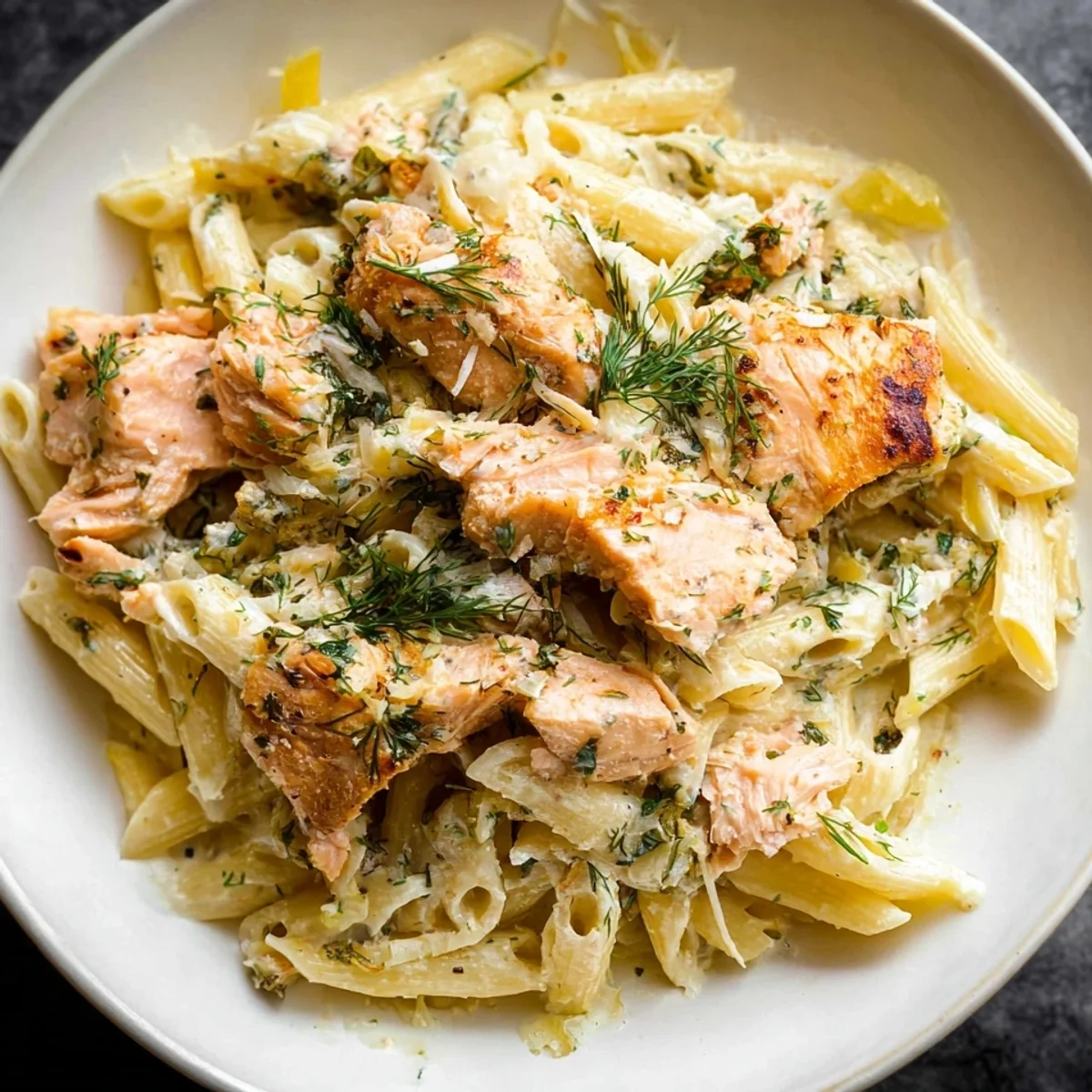


My kitchen, honestly, used to be a chaos zone. One evening, after a particularly long day, I just stared at some beautiful salmon fillets and a lonely bunch of dill. I wanted something comforting but fresh, you know? That's when the idea for this Lemon Dill Salmon Pasta just clicked. It felt like magic, transforming simple ingredients into something so vibrant and satisfying. Now, it's a weeknight hero in my home, a recipe I love sharing with everyone.
Oh, the first time I made this, I was so excited I forgot to drain the pasta properly. When I added it to the sauce, it was more like a lemon dill salmon soup pasta! Oops. I didn't expect that. My husband was a good sport, but we laugh about my "pasta-soup experiment" to this day. Now, I always, always make sure that pasta is super dry.
What You'll Need for This Lemon Dill Salmon Pasta
- 1 1/4 lbs salmon fillets, skin on or off: Salmon is the star here, right? I love a good wild-caught fillet, it just tastes so much better. Skin on or off, it’s up to you, but I sometimes leave the skin on for extra crispiness, then flake it off later. It's gotta be fresh, though, for that beautiful flaky texture in our Lemon Dill Salmon Pasta. Trust me, good salmon makes all the difference in this dish.
- 1 tbsp olive oil: This isn't just for cooking, it's the foundation of flavor. A good quality extra virgin olive oil can elevate the whole dish, honestly. I drizzle it on the salmon before roasting, and it helps get that perfect golden crust. It’s a small thing, but it makes a big impact on the overall richness and aroma.
- Salt and black pepper to taste: Seasoning is everything, my friend! Don't be shy, but don't overdo it either. I always season the salmon generously before cooking and then taste the sauce as I go. A good grind of fresh black pepper just wakes everything up. It’s about enhancing, not masking, the natural flavors.
- 12 oz linguine or fettuccine pasta: For this Lemon Dill Salmon Pasta, a long, flat pasta like linguine or fettuccine is ideal. It really grabs onto that creamy sauce and those flaky bits of salmon. Penne or rotini just don't have the same elegant feel, in my opinion. Plus, twirling it around your fork is half the fun, right?
- 3 cloves garlic, minced: Garlic, my love! It's the aromatic backbone of so many dishes, and this one is no exception. Freshly minced garlic, not the jarred stuff (please!), adds that warm, pungent depth without overpowering the delicate salmon. It just sings with the lemon and dill. Don't skip it, seriously, it’s a game-changer.
- 1 large lemon, zested and juiced: This is where the 'lemon' in Lemon Dill Salmon Pasta really shines! Zest first for maximum essential oils, then juice. That bright, tangy kick cuts through the richness of the cream and salmon beautifully. It's what makes the dish feel so fresh and vibrant, a little sunshine on a plate.
Making Your Lemon Dill Salmon Pasta: Step-by-Step
- Step 1: Prep & Cook Salmon:
- Alright, let’s get that salmon ready! Preheat your oven to a cozy 400°F (200°C). Pat those beautiful fillets dry this is key for a crispy exterior, trust me. Drizzle with a little olive oil, then sprinkle generously with salt and pepper. Pop them on a baking sheet and into the oven they go for about 12-15 minutes. We want them cooked through but still flaky and moist for our Lemon Dill Salmon Pasta. Don't overcook!
- Step 2: Boil Pasta:
- While the salmon's doing its thing, get a big pot of water boiling for your pasta. You want it salty like the sea, okay? Add your linguine or fettuccine and cook according to package directions until it's al dente. That means it still has a little bite to it. Remember, it'll finish cooking a tiny bit more in the sauce. Drain it, but snag about a cup of that starchy pasta water before you do it’s liquid gold for our Lemon Dill Salmon Pasta sauce!
- Step 3: Sauté Garlic & Broth:
- In a large skillet, heat up 2 tablespoons of olive oil over medium heat. Toss in your minced garlic and let it get fragrant, about 1 minute. Don't let it brown, hon, or it'll get bitter! Then, pour in the low-sodium chicken broth. Let it simmer gently for a couple of minutes, scraping up any delicious bits from the bottom of the pan. This step builds a lovely aromatic base for the sauce.
- Step 4: Make Cream Sauce:
- Now for the magic! Reduce the heat to low and slowly stir in the heavy cream. Let it warm through gently, don't boil it aggressively. Add the lemon zest and about half of the lemon juice. Whisk it all together until it's silky smooth. This is the heart of our Lemon Dill Salmon Pasta sauce, so taste it! Adjust with a pinch more salt or pepper if needed. You want it rich and bright.
- Step 5: Combine Pasta & Sauce:
- Time to bring it all together! Add your drained al dente pasta directly into the skillet with the cream sauce. Toss it gently with tongs, letting the pasta soak up all that gorgeous flavor. If the sauce seems a little too thick, add a splash or two of that reserved pasta water until it reaches your desired consistency. This keeps everything luscious and prevents it from getting clumpy. This is where the Lemon Dill Salmon Pasta really starts to look amazing.
- Step 6: Flake Salmon & Serve:
- Carefully remove the cooked salmon from the oven. Using a fork, gently flake the salmon into bite-sized pieces, discarding the skin if you left it on. Fold the flaky salmon and the fresh chopped dill into the pasta. Give it one last gentle toss. Taste again! A final squeeze of lemon juice, maybe a sprinkle of fresh pepper, and your beautiful Lemon Dill Salmon Pasta is ready to be devoured. So good, right?
Cooking this dish, for me, is pure joy. It’s one of those recipes where the aromas fill the kitchen, making everyone hungry before it even hits the table. There's something so satisfying about watching the sauce come together, smelling the fresh dill and lemon, and seeing those beautiful salmon flakes. It always feels like a little bit of gourmet magic in my own home.
Tips for Storing Your Leftover Pasta
So, you've got leftovers of this deliciousness? Awesome! To keep your pasta tasting great, let it cool completely before tucking it away. I like to store it in an airtight container in the fridge. It's good for about 2-3 days, honestly. Reheating can be a bit tricky, though. My first few times, I just nuked it and ended up with dry pasta and clumped sauce oops! To avoid that, gently reheat it on the stovetop over low heat, adding a splash of chicken broth or even a little milk to loosen the sauce back up. Stir it often until it's warmed through.

Swapping Ingredients in This Salmon Pasta
I've played around with this recipe quite a bit, hon! If salmon isn't your jam, shrimp or even pan-seared chicken breast would work beautifully. Just adjust cooking times. For the pasta, feel free to use penne or rotini if that's what you have, though I really do love the way linguine clings to the sauce. If heavy cream feels too rich, you could try half-and-half, but the sauce won't be quite as luxurious. And if fresh dill is hard to find, flat-leaf parsley is a decent stand-in, but the flavor profile will shift a bit. Experiment and find what you love!
Serving Up Your Lemon Dill Salmon Pasta
This pasta is pretty much a meal in itself, but a simple side can really make it shine. I love serving it with a crisp green salad, dressed lightly with a vinaigrette to complement the lemon in the pasta. A little crusty bread, maybe a baguette, is also perfect for soaking up any leftover sauce you don't want to waste a drop! And if you're feeling fancy, a chilled glass of Sauvignon Blanc or a light Pinot Grigio pairs beautifully with the bright, fresh flavors. It elevates the whole experience, making a weeknight meal feel like a special occasion!
The Story Behind My Salmon Pasta
Honestly, this dish doesn't have a deep, ancient cultural backstory like some recipes. It's more of a modern American creation, born from a desire for fresh, flavorful, and relatively quick weeknight meals. For me, it evolved from a simple baked salmon with dill, which then married my love for creamy pasta dishes. I was inspired by the Mediterranean flavors of lemon and dill, but wanted to bring that comfort of a hearty pasta. It’s a testament to how home cooks can fuse different ideas to create something new and delicious that fits their lifestyle.
Well, there you have it, my friends! My go-to recipe for a dish that always brings a smile to our faces. I hope you give this a try and fall in love with it as much as I have. It's truly a labor of love, perfected through many happy kitchen experiments. Let me know in the comments if you make it, and what you think! Happy cooking!

FAQs About This Salmon Pasta
- → Can I use frozen salmon for this recipe?
Yes, you totally can! Just make sure to thaw it completely in the fridge overnight before you cook it. Pat it super dry before seasoning and baking, just like fresh. You might need to adjust baking time slightly, so keep an eye on it to ensure it's cooked through but not overdone.
- → What's the best way to get fresh dill?
I always look for fresh dill in the herb section of my grocery store. You want bright green fronds, not wilted or yellowing. If you can't find fresh, dried dill can work in a pinch, but use about a third of the amount, as its flavor is much more concentrated.
- → Can I make this dish gluten-free?
Absolutely! Just swap out the regular linguine or fettuccine for your favorite gluten-free pasta. The rest of the ingredients are naturally gluten-free. Just make sure to check the labels on your chicken broth, as some brands can contain gluten-containing ingredients.
- → My sauce is too thin/thick. What should I do?
No worries! If it's too thick, slowly add more reserved pasta water (or a splash of broth) until it reaches your desired consistency. If it's too thin, let it simmer gently for an extra minute or two to reduce, or stir in a tiny bit of grated Parmesan cheese it helps thicken things up!
- → Can I add vegetables to this pasta?
Yes, please do! I sometimes toss in some blanched asparagus, frozen peas, or even sautéed spinach with the garlic. It adds extra color, nutrients, and texture. Just make sure they're cooked tender-crisp so they don't get mushy when combined with the pasta and sauce.